Braga: One of the World's Best Cities for Quality of Life (2026)
Last updated: July 2026
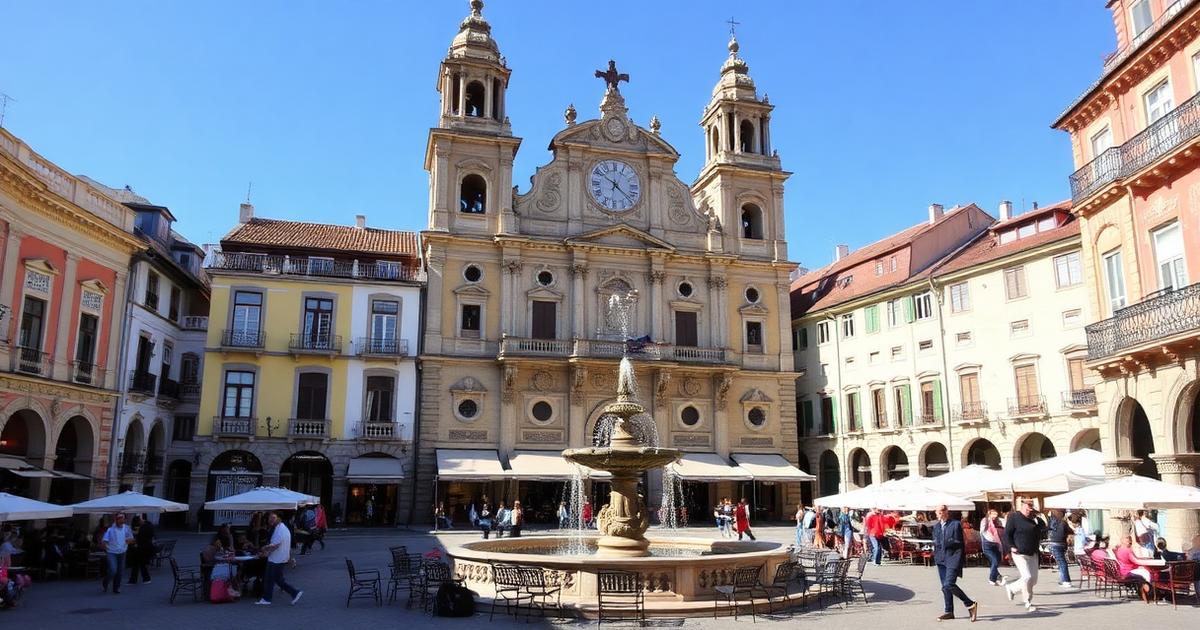
Braga has quietly become one of Portugal's most livable cities — and now it has the numbers to prove it. In 2026, Braga joined the Happy City Index, a global ranking published by the Institute for Quality of Life that evaluates 251 cities worldwide on how good they actually are to live in.
The index goes far beyond tourism or GDP. It scores cities across six pillars — citizens' well-being, economy, health, mobility, sustainability, and governance — using hundreds of indicators. Making the list puts Braga in the same conversation as Copenhagen, Zurich, Vienna and Singapore.
For anyone thinking about moving to Portugal, working remotely from Europe, or simply visiting somewhere that combines history with a genuinely modern lifestyle, Braga deserves a serious look.
In short: Braga offers big-city services with small-city calm. It has a young, university-driven population, a fast-growing tech scene, one of the lowest costs of living in Western Europe, and a UNESCO-listed historic center you can cross on foot.
Why Braga made the Happy City Index 2026
The Happy City Index doesn't reward the flashiest cities — it rewards the balanced ones. Here's how Braga scores across the pillars that matter.
1. Citizens' well-being
- Compact historic center (Sé de Braga, Praça da República, Arco da Porta Nova) that residents actually use daily.
- Strong sense of community around events like the Semana Santa (Holy Week) processions and São João de Braga festivities in June.
- Green space is close: the Parque da Ponte, Monte do Picoto and the sanctuary hill of Bom Jesus do Monte are all inside the city.
- Very low violent crime — Portugal ranks consistently among the safest countries in the world (Global Peace Index).
2. Economy
Braga is one of the fastest-growing economies in northern Portugal, powered by three engines:
- The University of Minho — one of Portugal's top research universities, feeding the city with engineers, designers and scientists.
- Startup Braga — a well-funded incubator that helped put Braga on the European startup map. See our full breakdown in the Portugal Startup Hubs guide.
- Industry — Bosch's largest car-multimedia plant in the world is in Braga, alongside Aptiv, dozens of software houses and a growing base of remote-work employers.
Cost of living is roughly 30–40% lower than Lisbon for rent, groceries and eating out.
3. Health
- Access to the SNS (Serviço Nacional de Saúde) at the Hospital de Braga — a modern reference hospital for the whole Minho region.
- A dense network of private clinics and specialists — browse them in the directory: Clinics in Braga and Pharmacies in Braga.
- Not sure which system to use? Read SNS vs Private Healthcare in Portugal.
4. Mobility
- Walkable historic core — you rarely need a car inside the city.
- Frequent Alfa Pendular and Intercidades trains to Porto (about 1 hour) and Lisbon (about 3 hours).
- Porto airport (OPO) is roughly 45 minutes by car or direct bus, with dozens of European connections.
- Cycling infrastructure has expanded quickly since 2020, and the city keeps adding pedestrian-only streets.
5. Sustainability
- Portugal produces a very high share of its electricity from renewables (wind, solar, hydro) — one of the highest in the EU.
- Braga has invested heavily in urban rehabilitation rather than sprawl, keeping the old city alive.
- Surrounding Peneda-Gerês National Park and the Cávado river valley are protected areas within easy reach.
6. Governance
- Portugal is a stable EU democracy with strong rule of law.
- Municipal services in Braga are known for being efficient by Portuguese standards — the city was one of the first to digitize a range of public services.
- Foreign residents can get a NIF, open a bank account, and register with the SNS relatively easily. Start with the NIF guide and the Moving to Portugal checklist.
What Braga is actually like
Braga is a city of about 200,000 people in the Minho region, roughly 50 km north of Porto. It's older than Portugal itself — founded by the Romans as Bracara Augusta — and it has been an important religious center for nearly 2,000 years. The nickname is "the Portuguese Rome."
That heritage is still visible everywhere:
- Sé de Braga — the oldest cathedral in Portugal.
- Bom Jesus do Monte — a UNESCO World Heritage baroque sanctuary, reached by a monumental zig-zag staircase or a 19th-century water-balance funicular still in operation.
- Santuário do Sameiro — panoramic views over the whole Minho valley.
- Praça da República and the arcaded cafés (Café A Brasileira, Café Vianna) where locals still spend hours over an espresso.
But Braga is not a museum city. It's genuinely young — around 20% of the population is students thanks to the University of Minho — and the nightlife, restaurant scene and cultural calendar reflect that.
Cost of living in Braga (2026 estimate)
| Item | Braga | Lisbon (for comparison) |
|---|---|---|
| 1-bed apartment, city center (rent/month) | €650–€850 | €1,300–€1,700 |
| Monthly public transport pass | ~€30 | €40 |
| Coffee (espresso) | €0.80–€1.00 | €1.20–€1.80 |
| Lunch menu | €8–€12 | €12–€18 |
| Gym membership | €25–€40 | €40–€70 |
Numbers are indicative — always check current listings, but the gap with Lisbon and Porto is real and consistent.
Where to eat, sleep and explore in Braga
Real, up-to-date places from the PortugalWhere directory:
- Restaurants in Braga — from traditional bacalhau à Braga and rojões à moda do Minho to modern bistros around Praça da República.
- Cafés in Braga — the arcaded historic cafés and a new wave of specialty coffee shops driven by the student crowd.
- Hotels & stays in Braga — boutique hotels inside restored 18th-century buildings and modern options near the train station.
- Attractions in Braga — Bom Jesus, the cathedral, Roman ruins and the museums.
- All businesses in Braga — the full directory.
Day trips within an hour:
- Guimarães — the birthplace of Portugal, another UNESCO city.
- Peneda-Gerês National Park — Portugal's only national park.
- Porto — 1 hour by train, direct.
Moving to Braga: practical next steps
If Braga's quality-of-life ranking convinced you to give it a real look, here's the shortest path from idea to living there:
- Visa — pick the right one:
- Passive income / retirement: D7 Visa
- Remote worker: D8 Digital Nomad Visa
- Get your NIF (tax number) — required for almost everything. See How to get a NIF.
- Open a Portuguese bank account — with your NIF and passport.
- Find housing — rents in Braga move fast because of the university; expect to sign quickly.
- Register with the SNS and, if you want, add private insurance. See SNS vs private healthcare.
- Full step-by-step: Moving to Portugal checklist.
If you're moving for work in tech, Braga is also one of the cities eligible for the IFICI 20% tax regime and the Tech Visa — details in the Startup Hubs guide.
Related guides
- Living in Northern Portugal — the region Braga belongs to, in full.
- Portugal Startup Hubs & Incentives — why founders and remote workers keep picking Braga.
- Medieval Cities & Festivals in Portugal — including Guimarães, right next door.
- Best places to visit in Portugal — the wider country picture.
Bottom line: Being included in the Happy City Index 2026 is not just a PR win for Braga — it reflects what residents have known for years. It's affordable, safe, well-connected, culturally rich, and small enough to feel like home within weeks. If you're serious about Portugal, don't skip it.
Looking for a real place to visit or contact?
Open the directory