Medieval Cities and Medieval Festivals in Portugal (2026 Guide)
Last updated: July 2026
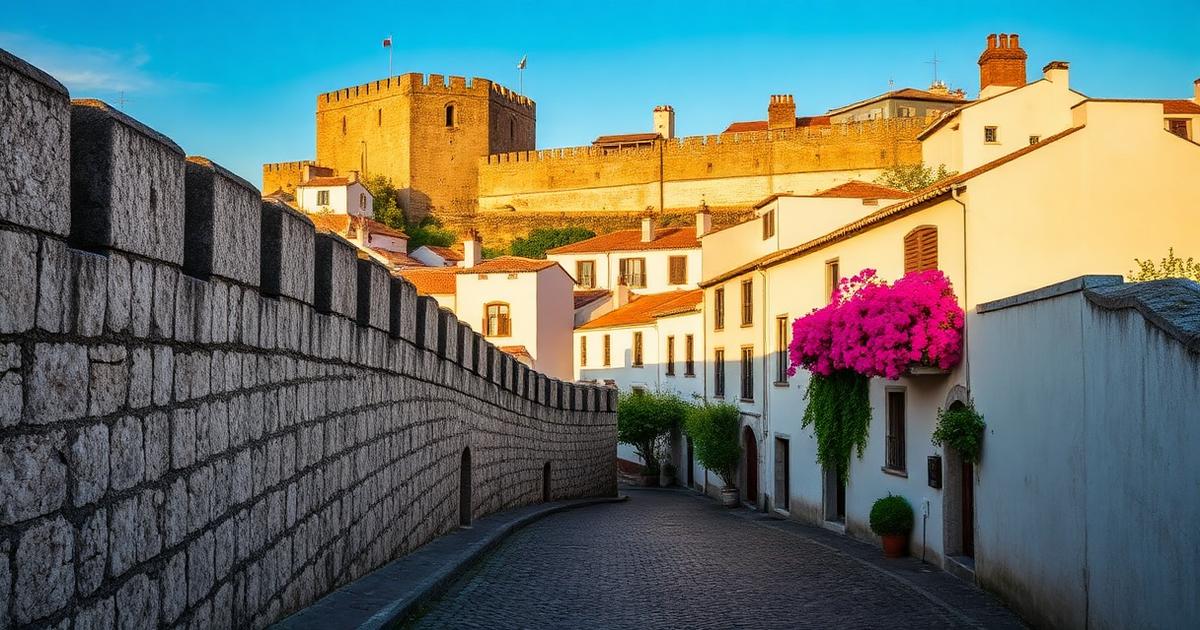
Portugal was born in the 12th century, and its map is still dotted with the castles, walled villages and stone streets left behind. From the birthplace of the nation in Guimarães to Templar strongholds like Tomar, and from cliff-top border fortresses to whitewashed hilltop villages, few countries in Europe pack this much medieval heritage into so small a territory. Every summer, dozens of these towns bring their past back to life with medieval fairs — full-scale reenactments with knights, jesters, falconers, blacksmiths and torch-lit banquets.
This guide covers the best medieval cities to visit, the biggest annual medieval festivals, and how to plan a trip around them.
The essential medieval cities
Guimarães — the birthplace of Portugal
The 10th-century castle of Guimarães is where Portugal's first king, Afonso Henriques, was born. The UNESCO-listed historic centre is one of the best-preserved in Iberia. Wander Rua de Santa Maria, the Paço dos Duques and the old Jewish quarter.
→ Places in Guimarães · Living in Northern Portugal
Óbidos — the walled village
A perfect medieval circuit of walls surrounding whitewashed houses trimmed in blue and yellow. Small enough to see in an afternoon, magical enough to stay overnight after the day-trippers leave. Home to Portugal's most famous medieval fair (see below).
Évora — Roman, medieval and Renaissance layered
The Alentejo capital is best known for its Roman temple, but the medieval cathedral, the Chapel of Bones, the Moorish street plan and the intact 14th-century walls make it one of the richest historic cities in the country.
→ Places in Évora · Restaurants in Évora
Tomar — the Templar city
Headquarters of the Knights Templar in Portugal, later the Order of Christ. The Convento de Cristo (UNESCO) is one of the most extraordinary religious complexes in Europe — a Templar rotunda ringed by Manueline cloisters. The old town below is compact and walkable.
Coimbra — the medieval university town
Portugal's oldest university (1290) sits above a medieval old town that tumbles down to the Mondego river. The Sé Velha (Old Cathedral) is one of the country's finest Romanesque buildings.
→ Places in Coimbra · Cafés in Coimbra
Marvão and Castelo de Vide — the Alentejo eagle's nests
Twin hilltop villages near the Spanish border. Marvão sits at 860m, wrapped in walls so tight you can circle the whole village on the ramparts in 20 minutes. Views stretch into Spain.
→ Places in Marvão · Places in Castelo de Vide
Monsaraz — the white village above the lake
Whitewashed medieval village on a hilltop above the Alqueva reservoir. Car-free centre, one main street, extraordinary sunsets. A short drive from Évora.
Monsanto — the village built into the boulders
Voted "most Portuguese village" in 1938 and used as a filming location for House of the Dragon. Granite houses squeezed between and under massive boulders. Ruined castle on top with 360° views over the Beira Interior.
Silves — the Moorish capital of the Algarve
Before Lisbon, before Lagos, Silves was the capital of the Algarve under Moorish rule. The red sandstone castle above the town is the best-preserved Moorish fortress in Portugal, and hosts one of the country's largest medieval fairs each August.
Elvas, Almeida, Estremoz — the border fortresses
The Alentejo frontier with Spain is a chain of star-shaped fortresses. Elvas (UNESCO) has the largest bulwarked fortifications in the world; Almeida and Estremoz complete the ring. All keep visible medieval cores inside their later walls.
→ Places in Elvas · Places in Estremoz · Places in Almeida
Ponte de Lima — Portugal's oldest town
Chartered in 1125 — before Portugal itself existed as a kingdom. Roman bridge, medieval tower, riverside promenade and one of the country's prettiest historic centres.
Bragança and Chaves — the far north
Bragança keeps a fully walled medieval citadel inside the modern city, with an intact 12th-century keep. Chaves has a Roman bridge still in daily use and a medieval castle above the old town.
→ Places in Bragança · Places in Chaves
Sintra — royal medieval fantasy
The Moorish Castle above Sintra dates from the 8th–9th century, and the Palácio Nacional in the town centre has been a royal residence since the medieval period. All wrapped in the misty forest that inspired Byron.
→ Places in Sintra · Sintra travel guide
The biggest medieval festivals in Portugal (annual)
Dates shift slightly each year — always confirm on the town's official website before booking.
Feira Medieval de Óbidos — July–August
The most famous medieval fair in Portugal. The entire walled village becomes a market of the 12th century: costumed vendors, jousting tournaments, falconry, taverns serving mead and roast meats, torch-lit night processions. Runs roughly two weeks in late July / early August.
→ Plan your stay: Hotels in Óbidos · Restaurants in Óbidos
Feira Medieval de Silves — August
The Algarve's answer, held in and around the red Moorish castle. Ten days of parades, souks, live combat, street theatre and Andalusian-influenced food. One of the largest historical reenactments in southern Europe.
Festas Nicolinas — Guimarães, late November / early December
Not a fair but a centuries-old student festival dating back to the 17th century, rooted in medieval traditions. Bonfires, processions, drumming through the streets of the birthplace of Portugal.
Viagem Medieval em Terra de Santa Maria — Santa Maria da Feira, early August
Held around the striking Castelo de Santa Maria da Feira just south of Porto, this is one of the largest medieval reenactments in Europe by attendance — often over half a million visitors across 10–12 days. Full recreated medieval town inside and around the castle.
Feira Medieval de Marvão — late September / early October
Smaller, more atmospheric. The whole hilltop village turns into a medieval market for a weekend, and the low autumn light on the walls is unbeatable.
Feira Medieval de Castro Marim — late August / early September
On the Algarve's eastern border with Spain, inside a 13th-century castle that once belonged to the Order of Christ. Four days, strong Templar theme.
Recriação Histórica de Belmonte — around 3 March
Marks the discovery of Brazil by Pedro Álvares Cabral, who was born in Belmonte. Historical reenactments, medieval markets and processions in the walled old town.
Feira Medieval de Trancoso — August
Trancoso's intact walls and Jewish quarter make it a natural setting. Two to three days of markets, music and living history.
Suggested medieval road-trip routes
4 days in the centre — the Templar loop
Lisbon → Óbidos (walls & fair) → Tomar (Convento de Cristo) → Coimbra (Sé Velha, old university) → back to Lisbon. → Restaurants in Tomar · Hotels in Coimbra
5 days in the Alentejo — border fortresses
Lisbon → Évora (2 nights) → Monsaraz → Estremoz → Elvas → Marvão & Castelo de Vide → back to Lisbon. → Restaurants in Évora · Hotels in Évora
4 days in the north — birthplace of the nation
Porto → Guimarães → Ponte de Lima → Viana do Castelo → Chaves → Bragança → back to Porto. → Living in Northern Portugal · Places in Ponte de Lima
3 days in the Algarve — Moorish south
Faro → Silves (castle & fair) → Castro Marim → back to Faro.
Practical tips
- Book accommodation months ahead for Óbidos, Silves and Santa Maria da Feira fairs — the towns are small and sell out.
- Buy the festival "medieval passport" at the entrance. It usually includes ticket + a period-appropriate cloth pouch used to pay vendors — much cheaper than paying entry fees separately.
- Go at night. Torch-lit streets, live music and roast smoke are the whole point. Days can be hot and crowded, especially in the Algarve.
- Dress up. No one will look twice if you wear a tunic or a hooded cloak — many locals do.
- Rent a car. Almost none of these towns are easily reachable by train. Buses exist but are infrequent.
- Cash is still king at medieval fairs and in the smallest villages. Bring some.
Explore more on PortugalWhere
Looking for a real place to visit or contact?
Open the directory