Pharmacies in Portugal: Prescriptions & What You Can Buy OTC
Last updated: July 2026
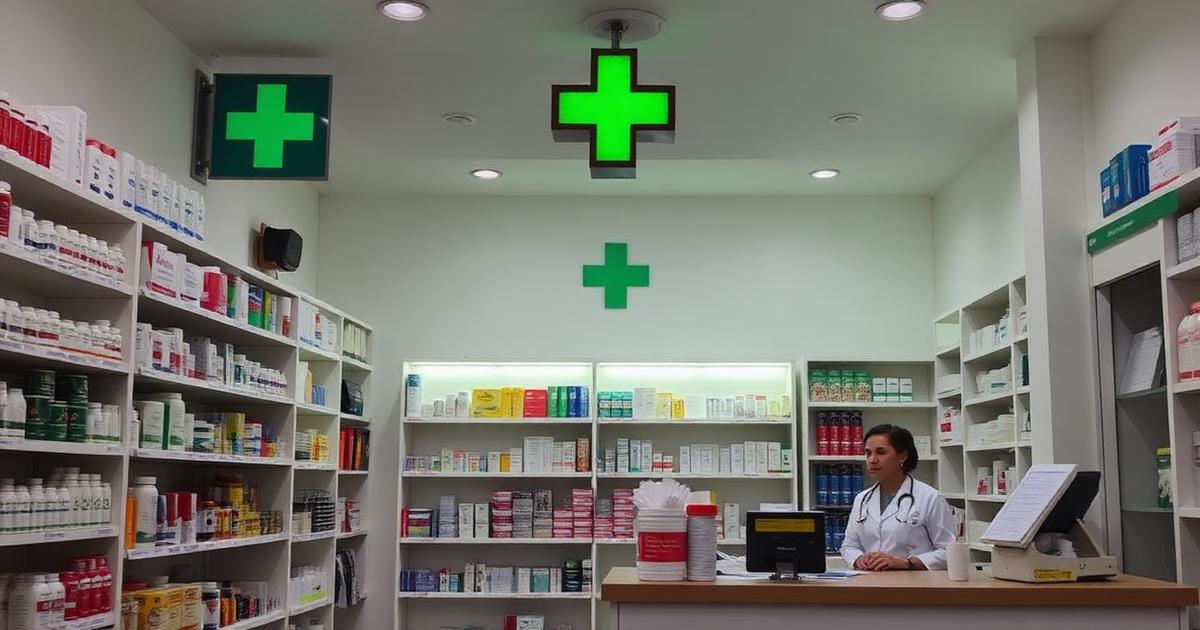
Portuguese pharmacies (farmácias) are more than a place to fill prescriptions — pharmacists here are trained to advise on minor ailments, and for many expats they're the first stop before ever seeing a doctor. Here's how the system actually works.
How to spot a pharmacy
Every licensed pharmacy displays an illuminated green cross, the same symbol used across much of Europe. It flashes or stays lit outside opening hours to show whether the pharmacy is currently open. Pharmacies are independently owned but tightly regulated — signage, layout, and the range of products they're allowed to sell are standardized nationally.
Farmácia vs. parafarmácia
This distinction trips up a lot of newcomers:
| Farmácia | Parafarmácia | |
|---|---|---|
| Prescription medicines | Yes, dispensed by a licensed pharmacist | No |
| Over-the-counter medicines | Yes | Yes (limited range) |
| Cosmetics, supplements, baby products | Yes | Yes |
| State subsidy (comparticipação) on medicines | Yes | No |
| Typical location | High street, near health centers | Supermarkets, retail parks |
If you need anything prescription-based or want the state discount applied, you must use a farmácia, not a parafarmácia.
Farmácia de serviço (24-hour duty pharmacy)
Not every pharmacy stays open all night — instead, towns and cities operate a rotating duty system (farmácia de serviço) so that at least one pharmacy nearby is open 24 hours on any given day. You'll find the current duty pharmacy:
- Posted on the door of every closed pharmacy in the area
- Listed on regional council (Câmara Municipal) websites
- Searchable via the national farmácias de serviço lookup tools online
- Sometimes overnight it operates through a hatch window rather than full open access, for safety
Duty pharmacies can charge a small surcharge for late-night/overnight service — treat this as normal, not overcharging.
What you can buy without a prescription
Portuguese pharmacists have real clinical training and can recommend and sell a fairly broad range of medicines without a doctor's prescription, including:
- Pain relief and fever reducers (paracetamol, ibuprofen, at standard doses/pack sizes)
- Allergy medication (antihistamines)
- Cold, flu, and cough remedies
- Basic topical treatments (antifungals, some antibiotics ointments in certain cases)
- Emergency contraception
- Vitamins, supplements, and baby formula
For anything stronger — antibiotics for internal use, most mental health medication, controlled substances — you'll need a prescription (receita), which can come from an SNS doctor, a private doctor, or occasionally be issued digitally and accessed via your Cartão de Cidadão or a code sent by SMS.
What needs a prescription
- Antibiotics
- Most chronic condition medication (blood pressure, diabetes, thyroid, etc.)
- Anything classified as a controlled substance
- Repeat prescriptions for ongoing treatment — these are often issued electronically now, so ask your doctor whether you need a paper copy at all
Prices and comparticipação (state subsidy)
If you're registered in the SNS with a número de utente, many prescription medicines are partially subsidized by the state — the discount is applied automatically at the pharmacy counter when you present your Cartão de Cidadão or residence card. The subsidy percentage varies by drug category (some essential medicines are subsidized far more heavily than others), so don't assume a fixed discount rate — ask the pharmacist what you're paying and why if it's unclear.
If you're not yet registered in the SNS, or you're using a private prescription, you pay the full retail price, which is still generally lower than pharmacy prices in the US or UK for equivalent generics.
Tips for expats
- Bring the generic (INN) name of your regular medication, not just the brand name — brand names differ by country, and pharmacists will recognize the generic name faster.
- Portugal generally allows a decent supply of most non-controlled medications to be sold at once, but if you're on a long-term prescription from abroad, bring documentation (or a doctor's letter) especially for anything that could be classified as controlled.
- Pharmacists are used to helping foreigners describe symptoms — most speak workable English in cities and tourist areas, less so in smaller towns.
- If your condition is more than minor, the pharmacist will tell you to see a doctor rather than sell you something — this is standard practice, not a brush-off.
Find a pharmacy near you → or, if you need a doctor rather than a pharmacist, see how SNS compares to private healthcare and how to register for your utente number.
FAQ
Do I need my utente number to buy medicine at a pharmacy? No — anyone can buy over-the-counter medicine. You only need it (or your Cartão de Cidadão linked to it) to get the state subsidy on subsidized prescription medicines.
Are pharmacies open on Sundays and holidays? Most regular pharmacies close, but the rotating duty pharmacy (farmácia de serviço) system ensures at least one nearby location stays open, often 24 hours.
Can I get my prescription from home filled in a different city? Yes — as long as it's a valid Portuguese prescription (paper or electronic), any farmácia in the country can dispense it, subject to stock.
Is it cheaper to buy medicine in Portugal than in my home country? Generally yes for generics, especially with the SNS subsidy applied, but it varies a lot by drug and your home country's system — don't assume without checking.
Can pharmacists give vaccinations in Portugal? Many pharmacies now offer certain vaccines (like flu shots) directly, without needing a doctor's appointment — check availability at your local pharmacy.
What if I run out of a prescription medication and can't get a doctor's appointment in time? Explain the situation to the pharmacist — in some cases, for ongoing chronic medication, they have discretion to dispense a small supply, but this isn't guaranteed and depends on the drug.
Last updated: July 2026.
Looking for a real place to visit or contact?
Open the directory