The Azores, Portugal: Complete Guide (2026)
Last updated: July 2026
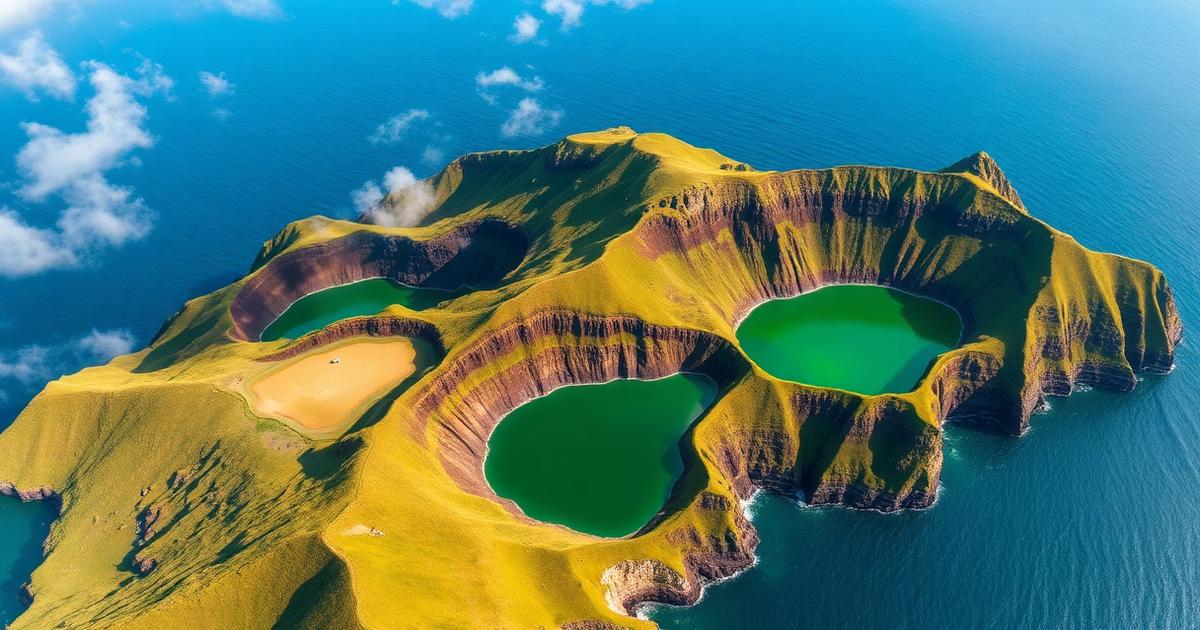
The Azores are nine volcanic islands in the middle of the Atlantic, about 1,400 km west of Lisbon. They belong to Portugal but feel like their own world — green calderas, hot springs, whale watching, cows outnumbering people, and villages of white houses with black basalt trim. This guide covers what to do, where to go, and how to plan a trip across the islands.
Why go to the Azores
- Nature on a different scale. Crater lakes, volcanic peaks, hydrangea-lined roads, waterfalls and geothermal pools — all inside a small archipelago.
- Whale and dolphin watching. More than 25 cetacean species pass through Azorean waters. Sperm whales, blue whales and orcas are regularly sighted.
- Uncrowded. Even in August you can hike for hours and see almost no one outside the main viewpoints.
- Mild, green year-round. Coastal temperatures stay between 14°C in winter and 25°C in summer. It rains often but rarely all day.
- Direct flights from Lisbon, Porto, Boston, New York and several European cities.
- Safe and easy. Very low crime, English widely spoken in tourism, Euro currency, EU rules.
The trade-off: weather changes fast, distances between islands need short flights or ferries, and it's not a beach destination in the classic sense.
The nine islands, briefly
The islands split into three geographic groups.
Eastern group
São Miguel — "The Green Island". The biggest, most populated (~140,000), and the easiest place to start. Home to Ponta Delgada, Sete Cidades' twin crater lakes, Furnas' geothermal valley, Lagoa do Fogo, and the Gorreana tea plantation (the oldest in Europe).
→ Browse places in Ponta Delgada · Ribeira Grande · Lagoa · Nordeste · Povoação · Vila Franca do Campo
Santa Maria — the driest, warmest and southernmost. Actual sandy beaches (rare in the Azores), rolling farmland and quiet villages. Good for a slower 2–3 day add-on.
→ Browse places in Vila do Porto
Central group
Terceira — historic and cultural. Angra do Heroísmo is a UNESCO World Heritage city, one of the most beautiful old towns in Portugal. Terceira also has bullfighting traditions (rope bullfights in the streets), Algar do Carvão (a walk-in volcanic chimney), and the American-run Lajes Air Base.
→ Browse places in Angra do Heroísmo · Praia da Vitória
Pico — dominated by Mount Pico (2,351 m), Portugal's highest mountain and a challenging but achievable overnight climb. Also known for its UNESCO-listed vineyard landscape — vines grown in tiny stone-walled plots on black lava.
→ Browse places in Madalena · Lajes do Pico · São Roque do Pico
Faial — the "Blue Island", famous for hydrangeas in summer and the Capelinhos volcano (1957 eruption that added land to the island). Horta's marina is a legendary transatlantic sailing stop.
São Jorge — long, narrow and dramatic. Famous for its fajãs (flat coastal platforms formed by landslides) and its cheese — Queijo de São Jorge is one of Portugal's best.
Graciosa — small, gentle, mostly farmland. A UNESCO Biosphere Reserve. Very quiet.
→ Browse places in Santa Cruz da Graciosa
Western group
Flores — arguably the most beautiful island of all. Waterfalls, crater lakes, sheer cliffs. Small, remote, and often skipped for that reason.
→ Browse places in Santa Cruz das Flores
Corvo — the smallest island (~400 people, one village). A giant caldera and almost nothing else. Day trip from Flores.
What to actually do
- Sete Cidades (São Miguel). Twin blue-and-green crater lakes. Best viewpoint: Miradouro da Boca do Inferno.
- Furnas (São Miguel). Bubbling fumaroles, hot springs, and cozido das Furnas — a stew slow-cooked underground by volcanic heat.
- Lagoa do Fogo (São Miguel). Wild crater lake with a steep hike down to the shore.
- Whale watching. Best from São Miguel, Pico and Faial. Peak season April–October.
- Climb Mount Pico. Overnight or predawn ascent to catch sunrise above the clouds.
- Angra do Heroísmo (Terceira). Walk the UNESCO old town, climb Monte Brasil, swim at Piscinas Naturais de Biscoitos.
- Capelinhos and Horta (Faial). The buried lighthouse, the volcano interpretation centre, and gin & tonics at Peter Café Sport.
- Fajãs (São Jorge). Hike down to Fajã dos Cubres or Fajã da Caldeira de Santo Cristo.
- Poça da Dona Beija (Furnas). Warm iron-rich pools open until late at night.
- Gorreana tea plantation. The only working tea plantation in Europe; free self-guided visit.
Food and drink
Azorean food is simple, slow and heavy on dairy, beef and fish:
- Cozido das Furnas — meat and vegetable stew cooked in the ground by volcanic heat.
- Alcatra — Terceira's slow-braised beef in wine and spices.
- Queijo de São Jorge — sharp, aged cow's milk cheese.
- Lapas grelhadas — grilled limpets with garlic butter.
- Bolo lêvedo — sweet muffin-like bread from Furnas.
- Passion fruit and pineapple grown in São Miguel greenhouses.
- Verdelho and Arinto dos Açores wines from Pico's lava vineyards.
→ Restaurants in Ponta Delgada · Restaurants in Angra do Heroísmo · Cafés in Ponta Delgada
Where to stay
- Ponta Delgada (São Miguel) — best base for a first trip. Hotels, guesthouses, restaurants, rentals, and the biggest airport.
- Furnas (São Miguel) — spa-style hotels around the geothermal valley.
- Angra do Heroísmo (Terceira) — historic boutique stays inside the UNESCO centre.
- Horta (Faial) — small hotels near the marina, great sunset views over Pico.
- Rural tourism across all islands — restored farmhouses (turismo rural) are widespread and often the best experience.
→ Hotels in Ponta Delgada · Hotels in Angra do Heroísmo · Hotels in Horta
Getting there and around
- Flights to the Azores. Main international gateway is Ponta Delgada (PDL) on São Miguel, with direct flights from Lisbon, Porto, Boston, New York, Toronto, Frankfurt, London and seasonal routes elsewhere. Terceira (TER) also has direct flights from Lisbon and North America.
- Between islands. SATA Azores Airlines runs inter-island flights (25–45 min). Ferries (Atlânticoline) connect the central group (Faial–Pico–São Jorge) daily and other islands seasonally.
- On each island. Rent a car — it's the only realistic way to see the Azores. Public transport exists but is infrequent. Distances are short but roads twist.
Weather and best time to go
- June to September — warmest, driest, best for hiking, whale watching, and inter-island flights (fewer weather delays). Peak crowds are still low by European standards.
- April, May, October — mild, green, hydrangeas start blooming in June and peak in July. Excellent shoulder-season value.
- November to March — mild but wet and windy; fewer whales, some hikes closed. Ferries between central islands can be cancelled.
The Azores have famously changeable weather. "Four seasons in a day" is a real thing. Pack layers, waterproofs, and always have a backup indoor plan.
Suggested itineraries
- 4–5 days: São Miguel only. Ponta Delgada, Sete Cidades, Furnas, Lagoa do Fogo, whale watching.
- 7 days: São Miguel + Terceira (or + Pico + Faial as a triangle).
- 10–14 days: São Miguel + central group (Terceira, Pico, Faial, São Jorge) — the classic wider trip.
- 2–3 weeks: Add Flores, Santa Maria or Graciosa for a slower, deeper stay.
Practical basics
- Currency: Euro.
- Language: Portuguese. English is common in Ponta Delgada, Angra do Heroísmo and Horta, less so in villages.
- Time zone: UTC-1 (one hour behind mainland Portugal, four hours ahead of US East Coast).
- Healthcare: Public hospitals in Ponta Delgada, Angra do Heroísmo and Horta; smaller health centres on other islands.
→ Clinics in Ponta Delgada · Pharmacies in Ponta Delgada
- Money: Cards accepted almost everywhere. Keep cash for small villages.
- Driving: Fine on main roads. Interior roads are narrow and often foggy at altitude.
- Sustainability: The Azores are certified as a sustainable tourism destination — respect trails, wildlife rules, and swimming areas.
Azores vs Madeira
Both are volcanic Portuguese archipelagos, but the vibe is different:
| Azores | Madeira | |
|---|---|---|
| Landscape | Nine islands, green, rainy, volcanic | One main island + Porto Santo |
| Best for | Nature, quiet, whale watching, hiking | Nature + more urban life in Funchal |
| Weather | Mild but changeable, wetter | Milder, sunnier on the south coast |
| Getting around | Flights/ferries between islands | Roads and tunnels; no islands to hop |
| Duration | 5–14 days | 5–10 days |
Many travellers do both trips over separate visits.
Related guides on PortugalWhere
- Best places to visit in Portugal
- Living in Madeira
- Porto Santo, Madeira
- Moving to Portugal checklist
Explore the Azores on PortugalWhere
Looking for a real place to visit or contact?
Open the directory