Putting Your Kids in Portuguese Public School: Honest Guide
Last updated: August 2026
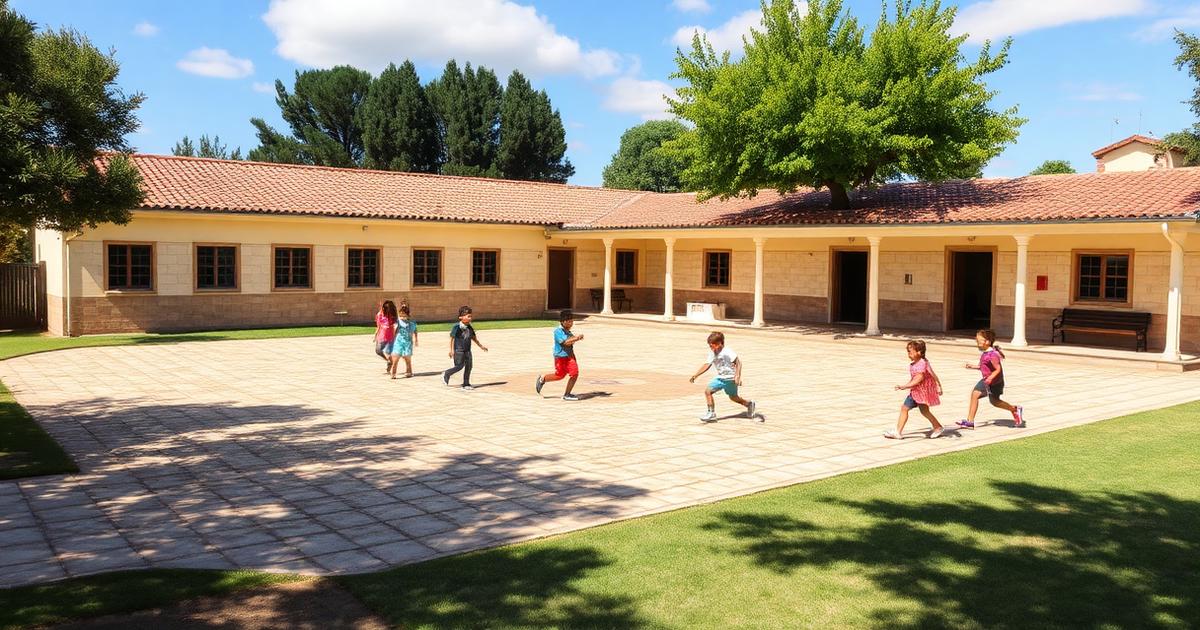
International schools get most of the attention in expat forums, but they're not the only option — and for many families, they're not even the best one. Portugal's public school system is free, includes structured support for children who don't yet speak Portuguese, and offers something international schools can't: genuine, daily immersion in the local language and community. Here's an honest look at what that actually involves.
How enrollment works
Public school placement in Portugal is tied to your residence area (área de residência), not your preference. In practice:
- You enroll at the school assigned to your parish or catchment area, based on your registered address.
- If you have a preference for a specific school, proximity to home is generally the deciding factor when there's a choice — you don't apply school-by-school the way you would with international schools.
- Enrollment is done through the school itself or the local education authority (Agrupamento de Escolas), and you'll need your child's documents (passport, previous school records if available, NIF, and proof of address).
Because placement follows residence, where you choose to live has a direct effect on which public school your child attends — worth checking before signing a lease if the local school is a priority.
Support for non-Portuguese-speaking students
This is the part expat families are often surprised by. Portuguese public schools have formal mechanisms to support students who arrive without Portuguese:
- Classes for reception/integration (often referred to informally as "turmas de acolhimento" or similar support structures) provide intensive Portuguese language support for newly arrived students, run alongside or before mainstream classes depending on the school and student's level.
- Schools assess each child's starting level and adjust the amount of dedicated language support accordingly — younger children typically integrate faster and need less formal support than teenagers.
- Support isn't uniform nationwide; provision depends on the specific school and Agrupamento, so it's worth asking directly what's available before enrolling, especially in smaller towns with fewer international families.
The honest pros
- It's free. No tuition, no enrollment fees, no waiting list dynamics — a meaningful difference from the cost of international schooling.
- Real immersion. Children who go through the public system tend to reach conversational and academic fluency in Portuguese far faster than those in an English-medium international school.
- Social integration. Local friendships, local sports clubs, local birthday parties — public school plugs your child into the actual community around you, not just the expat bubble.
- No admissions competition. Unlike the most in-demand international schools, there's no waiting list to worry about for a spot at your area's assigned school.
The honest cons
- Initial language barrier. Even with support classes, the first months can be genuinely hard for a child with zero Portuguese, particularly at secondary level where academic content is more language-dependent.
- Less continuity if you might leave Portugal. If there's a real chance you'll relocate again in a few years, transferring back into a foreign curriculum system can be harder from the Portuguese public track than from an international school.
- Fewer English-speaking staff. Unlike international schools, don't expect much English at the front desk or in parent communications — bring a translation app or a patient friend for the first few meetings.
- Curriculum and exam structure is Portuguese, which matters if you're planning on your child eventually applying to universities outside Portugal via a non-Portuguese exam system.
When public school makes the most sense
Public school tends to be the better fit when:
- You're planning to stay in Portugal long-term (or permanently)
- Your children are younger (language acquisition is generally faster and less disruptive at primary age)
- Cost is a real constraint, and international school fees would strain your budget
- You want your family genuinely integrated into Portuguese life, not just geographically relocated
It tends to be a harder fit when your stay is likely temporary, your children are already deep into a secondary curriculum abroad (mid-IGCSE or mid-AP, for example), or continuity with a foreign exam system is a firm requirement.
FAQ
Do expat children need to already speak Portuguese to enroll in public school? No. Schools provide language support for non-Portuguese speakers, though the intensity and format of that support varies by school.
Is public school really free? Yes, tuition is free. There are minor costs for things like school meals, materials, and trips, but nothing comparable to international school fees.
Can I choose which public school my child attends? Generally no — placement follows your registered address and catchment area, with limited flexibility.
How long does it typically take for a child to become fluent in Portuguese? It varies widely by age and starting point, but younger children in immersive public school environments often reach conversational fluency within a year or so, with academic fluency taking longer.
Can we switch from public school to an international school later, or vice versa? Yes, transfers happen in both directions, though timing matters — switching curricula mid-exam-cycle (e.g., partway through IGCSEs or Portuguese national exams) is more disruptive than switching between school years.
Should parents also learn Portuguese if their kids are in public school? It helps enormously, both for supporting homework and for engaging with teachers and other parents. See our guide to Portuguese language schools for options.
Browse public and private school options in our schools directory →
Last updated: July 2026.
Looking for a real place to visit or contact?
Open the directory