Food Tourism in Madeira: The Complete Guide (2026)
Last updated: July 2026
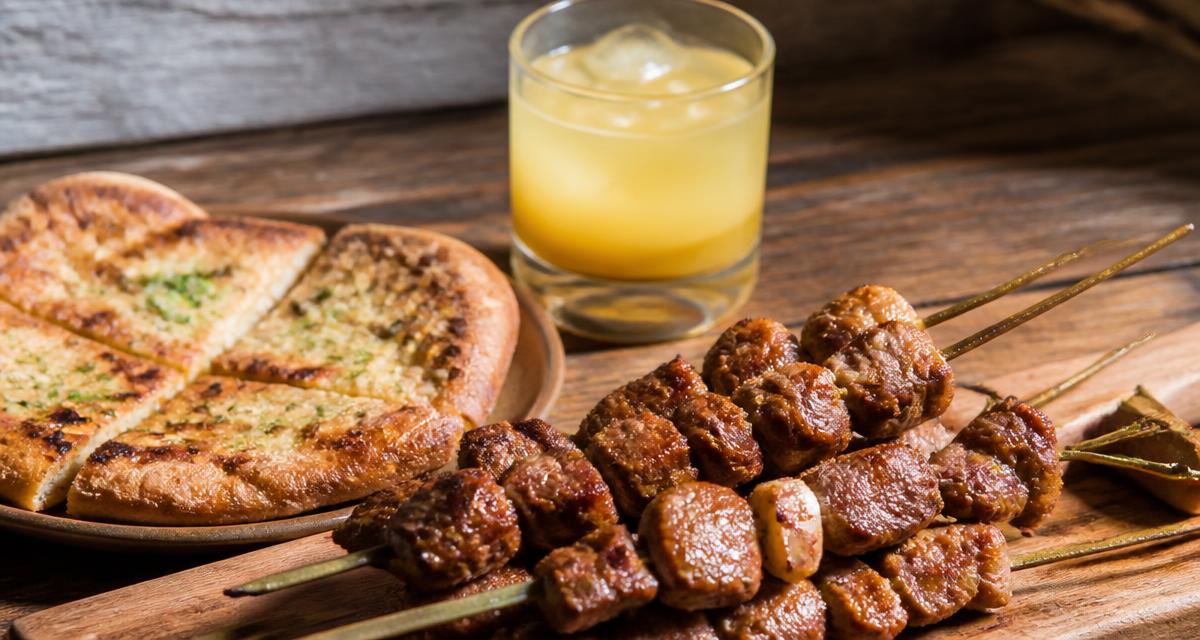
Madeira eats differently from mainland Portugal. It's an Atlantic island with a subtropical climate, volcanic soil and 500 years of sugar, wine and fishing history — so the table is built on tuna and black scabbard fish, beef grilled on laurel skewers, garlic flatbread baked on a stone, tropical fruit that never travels, and a rum-based drink invented as cold medicine.
This guide covers what to eat in Madeira, where to eat it, what things cost in 2026, and how to plan a few days on the island around food.
What makes Madeira's food different
- Fish you rarely see elsewhere. Espada (black scabbard) is caught at 800–1,200 m depth off the island and served almost nowhere else in Europe. Fresh tuna (atum) is the other pillar.
- Beef on a laurel branch. Espetada is chunks of beef rubbed with garlic and coarse salt, skewered on a bay laurel stick and grilled over wood embers. The laurel perfumes the meat as it cooks.
- Bread as an event. Bolo do caco — a soft, round flatbread cooked on a hot basalt stone and split open with garlic-parsley butter — comes to every table.
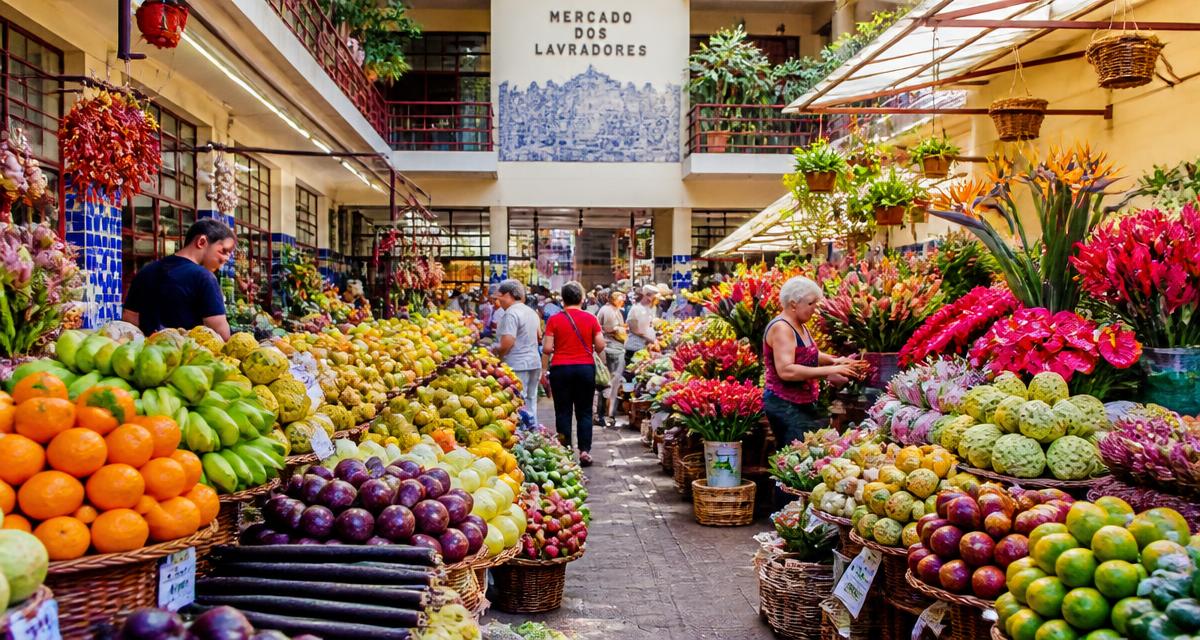
- Tropical fruit. Custard apple (anona), passion fruit (maracujá), monstera fruit (banana-ananás), tamarillo, guava, and the small, dense Madeiran banana.
- Two great drinks. Poncha, sugarcane rum with honey and citrus, and Madeira wine, a fortified wine deliberately heated during ageing — one of the few wines in the world that improves once opened.
The dishes to prioritise
| Dish | What it is | Where it shines |
|---|---|---|
| Espada com banana | Black scabbard fillet, fried, with banana and passion-fruit sauce | Funchal seafront restaurants |
| Espetada em pau de louro | Beef on a bay laurel skewer, wood-grilled | Câmara de Lobos, Santana, Estreito |
| Bolo do caco | Stone-baked flatbread with garlic butter | Everywhere; best fresh off the plancha |
| Lapas grelhadas | Grilled limpets with garlic butter and lemon | Coastal grills and beach bars |
| Atum de cebolada | Tuna steak with onion, garlic and vinegar | Traditional tascas |
| Milho frito | Fried cubes of maize polenta | The side dish with espetada |
| Sopa de trigo | Wheat and vegetable soup with pork | Winter, inland villages |
| Bolo de mel | Dark spiced honey-and-molasses cake | Christmas, but sold year-round |
| Queijadas & broas | Small cheese tarts and honey biscuits | Pastelarias in Funchal |
| Nikita | Frozen beer, white wine, pineapple and ice cream | Câmara de Lobos, on a hot afternoon |
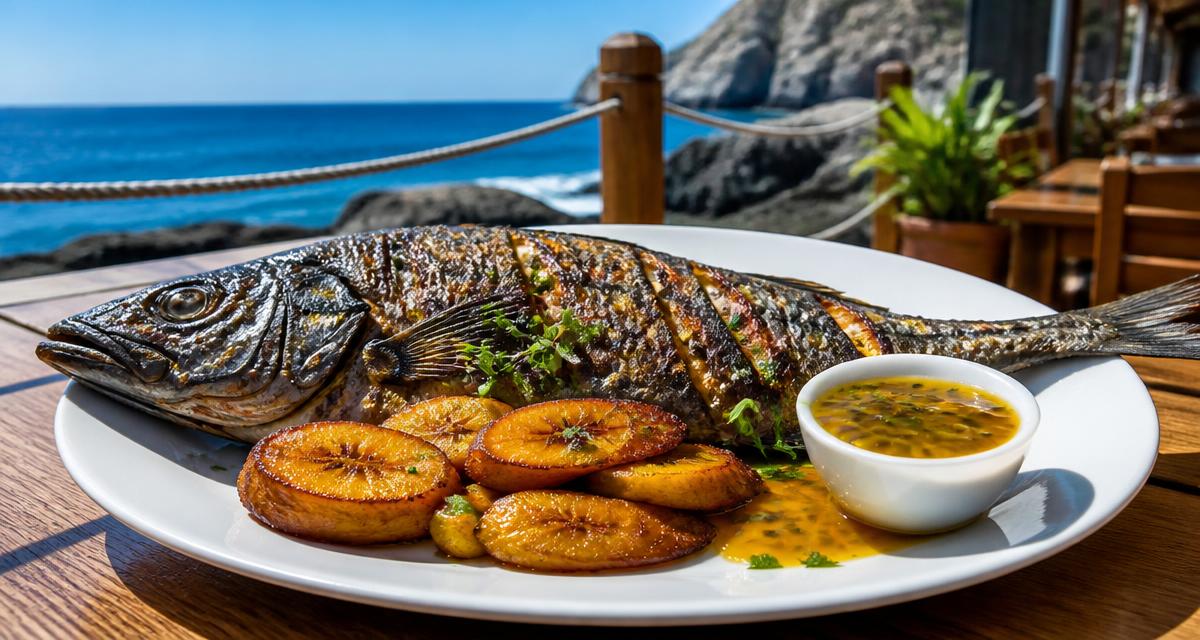
Funchal — start here
Funchal has the island's widest range of eating, from €10 tasca lunches to Michelin-starred tasting menus (Madeira has held stars at Il Gallo d'Oro and William).
Zona Velha (Old Town)
Rua de Santa Maria is a single narrow street lined with restaurants and painted doors. Touristy, lively, and still the easiest place to eat espetada and drink poncha outdoors. Go early or book.
Mercado dos Lavradores
The 1940s market hall: tropical fruit upstairs, the fish hall downstairs where whole black scabbard are laid out — long, black and prehistoric-looking. Go before 11:00, and treat the aggressive fruit tasting as a sales pitch, not a gift.
Sé & city centre
Old cafés, pastelarias, wine lodges. This is where you taste Madeira wine properly — Blandy's Wine Lodge runs tastings across Sercial, Verdelho, Bual and Malmsey.
Lido & Promenade
The seafront strip west of the centre: hotel restaurants, sunset terraces, seafood with a view.
→ Restaurants in Funchal · Cafés in Funchal · Bakeries · Bars
Where to eat outside Funchal
Câmara de Lobos
The fishing village 10 minutes west of Funchal, and the birthplace of both poncha and the nikita. Small bars serve poncha made to order with a wooden mexelote stirrer. Best place on the island for an afternoon drink by the harbour.
Estreito de Câmara de Lobos & Santana
Inland and up the hill: wood-fired espetada houses where the skewer arrives hanging from a stand over your table. Santana, on the north coast, adds the thatched palheiro houses and hearty mountain cooking.
Porto Moniz & the north coast
Natural volcanic pools plus limpets and fresh fish straight off the boat. The drive itself is half the reason to go.
Ribeira Brava & Ponta do Sol
Sunny south-west coast, quieter restaurants, the island's remote-work hub in Ponta do Sol.
→ Places in Ribeira Brava · Places in Ponta do Sol
Machico & Caniçal
East end: Madeira's only large sandy beach at Machico, and Caniçal for straight-off-the-boat tuna.
Porto Santo
The sister island, 2h 15min by ferry: beach restaurants on the sand, grilled fish, lemon-and-honey poncha.
→ Places on Porto Santo · Porto Santo guide
Madeira wine, poncha and rum
Madeira wine. Four classic grapes, dry to sweet: Sercial (dry, aperitif), Verdelho (medium-dry), Bual (medium-sweet), Malmsey/Malvasia (sweet, with dessert). Entry-level 3-year bottles start around €12; 10-year Colheitas €35–60; vintage Frasqueira runs into the hundreds. Tastings in Funchal cost roughly €6–20.
Poncha. Sugarcane aguardente, honey and lemon, stirred with a wooden pestle. Regional versions: pescador (lemon, the original), orange, passion fruit, tangerine. €2.50–4 a glass in a village bar. It is stronger than it tastes.
Rum agrícola. Madeira distils rum directly from fresh cane juice — visit the working mills in Porto da Cruz and Calheta, especially during the spring cane harvest.
Coffee and beer. A chinesa is the local milky coffee; the island beer is Coral.
Practical tips
Best time to go. Year-round — 19–26°C in summer, 16–20°C in winter. Food-wise, aim for late August (Madeira Wine Festival, Funchal and Estreito), September (grape harvest), or late November–December for bolo de mel, Christmas markets and the Mercado dos Lavradores all-night market on 23 December.
How long to stay. Four to five days for a food-focused trip: two in Funchal, one on the north coast, one in Câmara de Lobos and the wine villages, and one for Porto Santo or a levada walk to earn your dinner.
Meal times. Lunch 12:30–15:00, dinner 19:00–22:00. Rural places close earlier than Funchal.
The couvert. Bread, butter, olives and sometimes bolo do caco arrive unrequested and are charged if eaten. Declining is normal.
Booking. Zona Velha and the well-known espetada houses fill up in summer — book a day ahead. Tasting menus need weeks.
Costs (2026, per person). Coffee €0.90–1.50. Poncha €2.50–4. Bolo do caco with garlic butter €2.50–4. Tasca lunch €10–16. Espetada with sides €14–22. Mid-range dinner with wine €25–40. Seafood restaurant €40–65. Tasting menu €120–220.
Getting around. A car makes food travel far easier — the best espetada and north-coast fish are not on a bus route. If you're drinking poncha, don't drive.
A four-day eating plan
Day 1 — Funchal. Market in the morning, tasca lunch in the centre, Madeira wine tasting in the afternoon, espada com banana for dinner in the Zona Velha.
Day 2 — Câmara de Lobos & the hills. Poncha at the harbour, lunch on grilled limpets, then a wood-fired espetada dinner in Estreito with milho frito.
Day 3 — North coast. Drive via Seixal and Porto Moniz, swim in the volcanic pools, fresh fish for lunch, sopa de trigo and bolo de mel in Santana.
Day 4 — East or Porto Santo. Tuna in Caniçal and the beach at Machico, or the ferry across to Porto Santo for fish on the sand.
Where to look next
- Living in Madeira: complete guide
- Porto Santo, Madeira
- Best places to visit in Funchal
- Food tourism in Lisbon
- Browse every listing in Funchal
Madeira's best meals are rarely the most expensive ones. A laurel skewer over embers, warm bolo do caco, a glass of poncha and the Atlantic below the terrace is the whole island in one sitting.
Looking for a real place to visit or contact?
Open the directory